

 M-S: 8:00am - 6:00pm

Paint Protection Film
One drive down I-95 behind a loaded truck is all it takes. Rock chips, gravel, and road debris hit your hood and bumper at highway speed, leaving damage that no amount of buffing can undo. Once the clear coat is chipped through, the only fix is a repaint.
Paint protection film prevents that damage from ever reaching your paint. It's a clear, nearly invisible urethane barrier that absorbs impacts, resists scratches, and keeps your finish looking factory-fresh for years.
What Is Paint Protection Film?
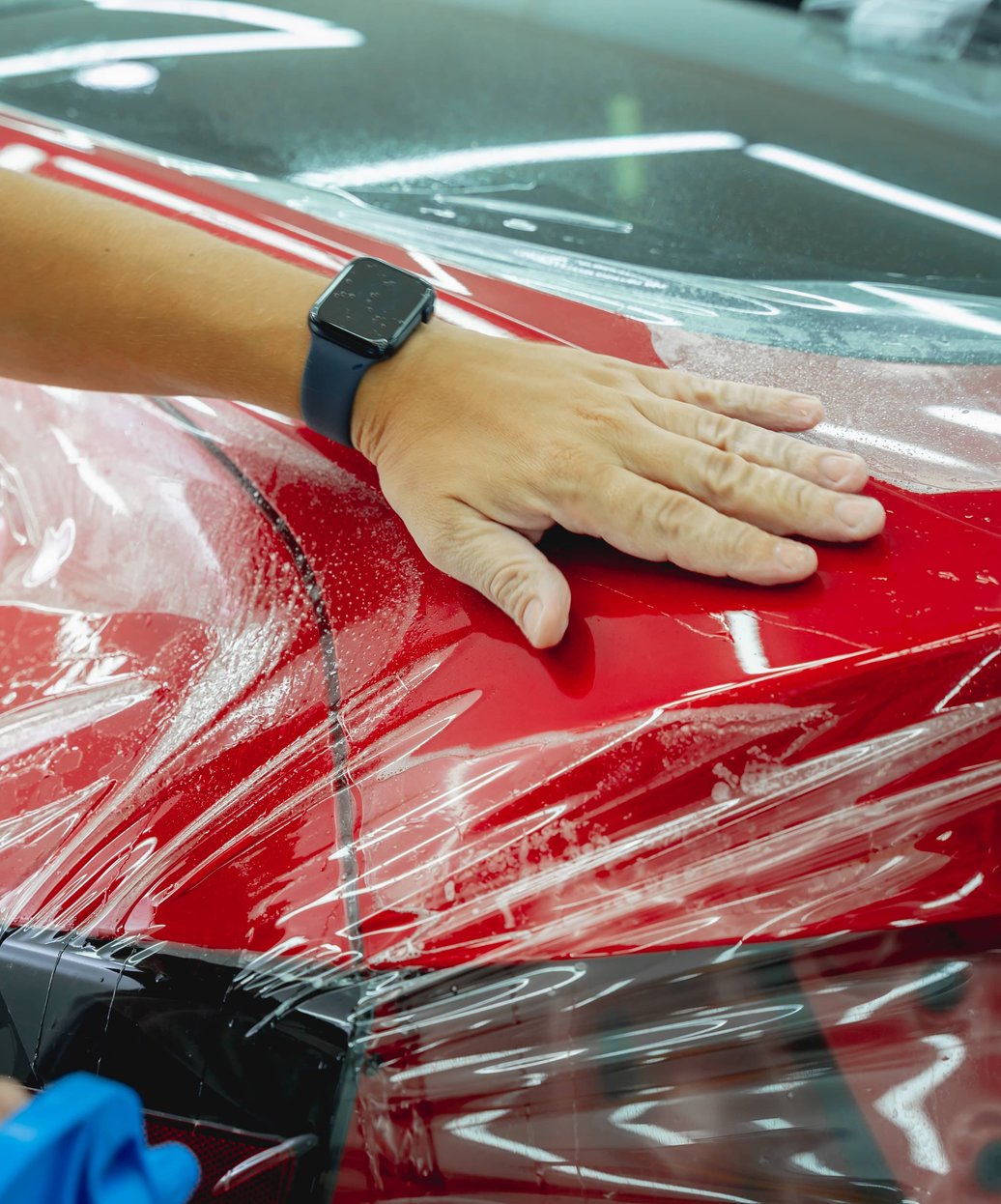
PPF is a thick, optically clear thermoplastic urethane film applied directly over your vehicle's painted surfaces. It was originally developed for military helicopter rotor blades and has been used in the automotive world for decades. The material is tough enough to stop rock chips and road debris cold, yet flexible enough to wrap around complex body lines without bubbling or lifting.
Once installed, quality PPF is virtually undetectable. It won't change your paint color, dull the finish, or alter the look of your vehicle. What it will do is take every hit the road dishes out so your factory paint doesn't have to.
Self-Healing Film That Fixes Itself
Modern PPF has a self-healing clear coat built into the top layer. Light scratches, swirl marks, and scuffs from everyday contact disappear on their own when the film is exposed to heat. In Florida, that happens naturally just by parking in the sun for a few minutes.
This means minor brush marks from car washes, fingernail scratches near door handles, and light abrasion from daily use won't leave a permanent mark on the film. The surface resets itself over and over again.
Why PPF Matters in Florida
Florida throws a lot at your paint. I-95 construction zones are a constant source of kicked-up gravel and debris. Lovebug season leaves behind acidic residue that eats through clear coat fast. Sand from coastal roads like A1A acts like fine-grit sandpaper at speed.
PPF handles all of it. Rock chips get absorbed by the film instead of gouging your paint. Bug acids sit on a sacrificial layer instead of bonding to your clear coat. Sand abrasion wears on the film, not your factory finish. If you drive regularly in Northeast Florida, your paint is exposed to all of these threats year-round.
Common Coverage Areas
Not every panel on your vehicle faces the same level of risk. The front end takes the worst of it. That's why most PPF installations focus on the areas that get hit the hardest.
- Front Bumper: First point of contact for rock chips, bug impacts, and road debris at highway speeds.
- Hood and Fenders: Catch gravel and sand kicked up by the vehicle ahead of you, especially in construction zones.
- Side Mirrors and Door Edges: Collect nicks from parking lots, drive-throughs, and everyday contact.
- Rocker Panels and Rear Bumper: Exposed to road spray, cargo loading scratches, and debris kicked up from your own tires.
Partial vs. Full Body Coverage
A partial front package covers the bumper, partial hood, fenders, and mirrors. It protects the areas that absorb the most damage and works well for daily drivers who want solid protection without wrapping the entire vehicle.
Full body PPF covers every painted surface from bumper to bumper. It's the preferred option for high-end vehicles, brand-new cars, and owners who want complete protection and maximum resale value. We also cover door cups, headlights, fog lights, and loading areas on the rear bumper where scratches from groceries and luggage add up fast.
Why Choose Proshine for Paint Protection Film
We Come to You
Proshine is fully mobile. We bring all equipment and materials to your home or office and handle the entire installation on-site. No need to drop your car off at a shop or rearrange your schedule. We serve St. Johns County, St. Augustine, Nocatee, Ponte Vedra, Durbin, and the greater Jacksonville area.
20+ Years of Hands-On Experience
Owner Lawrence has spent over two decades in the detailing industry. He was twice selected for the Air Force One Detailing Team and is a member of Detail Mafia. PPF installation demands a steady hand and precise technique, especially around complex curves and tight body lines. That kind of precision only comes from years of doing the work.
Thorough Surface Preparation
Film applied over contaminated or damaged paint won't look right and won't last. We prep every surface before installation so the film bonds cleanly and lays perfectly flat.
- Decontamination Wash: Full hand wash and clay bar treatment to remove embedded contaminants, iron deposits, and surface grime.
- Surface Correction: Any existing scratches or swirl marks are addressed before film goes on so they aren't sealed underneath.
- Precision Fit: Each piece of film is carefully positioned and worked into place using controlled heat and pressure for a seamless, bubble-free finish.
- Final Inspection: Every edge, seam, and panel is checked to confirm full adhesion and a clean result.
Common Questions About Paint Protection Film
How Long Does PPF Last?
Professional-grade paint protection film typically lasts 7 to 10 years with proper care. The lifespan depends on the specific product, how much sun and road exposure the vehicle gets, and whether it's maintained correctly. We use top-tier films designed to hold up in Florida's heat and UV conditions.
Will the Film Turn Yellow Over Time?
Older PPF products had a reputation for yellowing after a few years. Modern films have built-in UV inhibitors that prevent discoloration. The films we install are designed to stay optically clear for the full life of the product, even under constant Florida sun exposure.
Can I Wax or Ceramic Coat Over PPF?
Yes. You can apply wax or a ceramic coating on top of paint protection film. A ceramic coating over PPF is actually a popular combination. The film handles impact protection while the coating adds hydrophobic properties, UV resistance, and easier cleaning. We offer both services and can set up the right combination for your vehicle.
What's the Difference Between PPF and Ceramic Coating?
They protect against different things. PPF is a physical barrier that absorbs rock chips, scratches, and road debris. Ceramic coating is a chemical layer that repels water, dirt, and UV damage. PPF stops impact damage. Ceramic coating stops environmental damage. Many of our customers choose both for complete coverage.
- Stops rock chips, gravel, and road debris from reaching your paint
- Self-healing top coat that erases light scratches in Florida sunlight
- UV-resistant film that stays clear without yellowing for years
- Preserves factory paint condition and long-term resale value
Proshine holds a 5.0 customer rating because we treat every vehicle with the same care and precision, whether it's a daily commuter or a weekend show car. Lawrence built this business on doing the job right the first time, and that standard hasn't changed in over 20 years.
Get a Free Paint Protection Film Quote
Schedule Your Free Estimate